Chicken Road Strategy
Chicken Road by inOut — a crash-style road game with rising multipliers, lane risk levels and a cash-out decision every step.
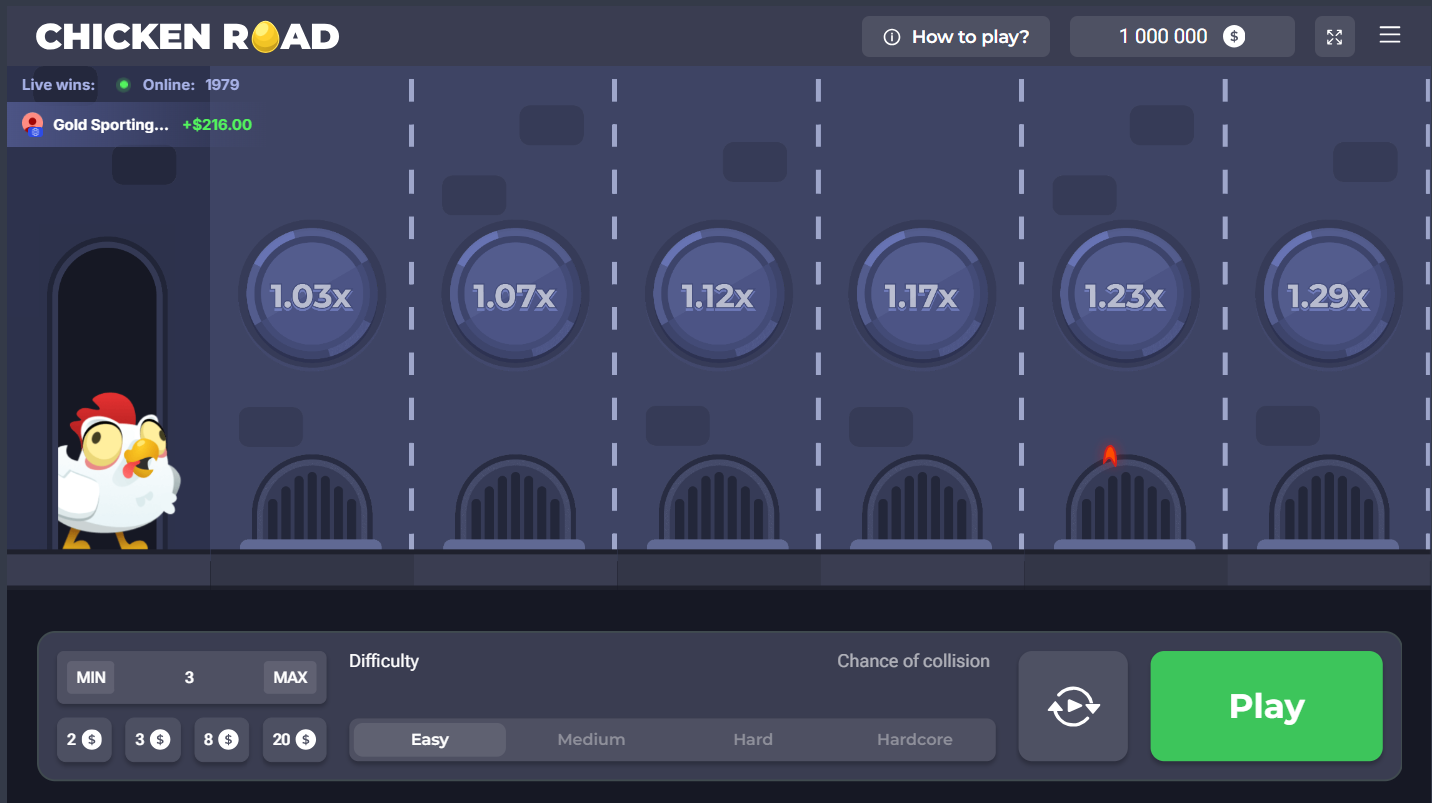
Chicken Road is a certified RNG game, which means no strategy can change the underlying probability of any individual step. What you can control is difficulty selection, bet sizing, cash-out discipline and session structure — and those four things together determine whether your bankroll lasts long enough to actually experience the game's better outcomes. This guide breaks each one down with concrete numbers, not vague advice.
Step 1 — Choose Your Difficulty Based on Session Goals, Not Mood
Difficulty is the first and most consequential decision in every Chicken Road session. It doesn't change your long-run RTP, but it completely changes how your bankroll will behave during the session.
| Difficulty | Per-step risk | Approx. max multiplier | Session style it suits |
|---|---|---|---|
| Easy | ~4% | ~24.5x | Long sessions, learning the interface, steady small wins |
| Medium | ~12% | ~2,254x | Balanced risk for players comfortable with crash mechanics |
| Hard | ~20% | ~52,000x | Shorter sessions, faster swings, higher tolerance for variance |
| Hardcore | High (unpublished exact figure) | 3,000,000x+ | Single-step gambles only, separate small bankroll |
A practical rule: if your goal for the session is to play for an hour and stay engaged without big swings, Easy or Medium will get you there. If your goal is a quick, high-variance attempt with money you've already mentally written off, Hardcore is built for exactly that — and nothing else.
Step 2 — Set Your Bankroll Before You Open the Game
Bankroll sizing should happen before you place a single bet, not after a loss. A widely used guideline across crash games is to risk no more than 1–2% of your total session bankroll on any single round.
| Session bankroll | Suggested bet size | Approx. rounds available |
|---|---|---|
| $20 | $0.20–$0.40 | 50–100 rounds |
| $50 | $0.50–$1.00 | 50–100 rounds |
| $100 | $1.00–$2.00 | 50–100 rounds |
| $200 | $2.00–$4.00 | 50–100 rounds |
This sizing keeps a single bad string of early crashes from ending your session prematurely, while still giving you enough rounds to see how the difficulty level you've chosen actually behaves over a meaningful sample.
Ready to cross the road?
Open a recommended casino and start playing instantly.
Step 3 — Decide Your Cash-Out Target in Advance
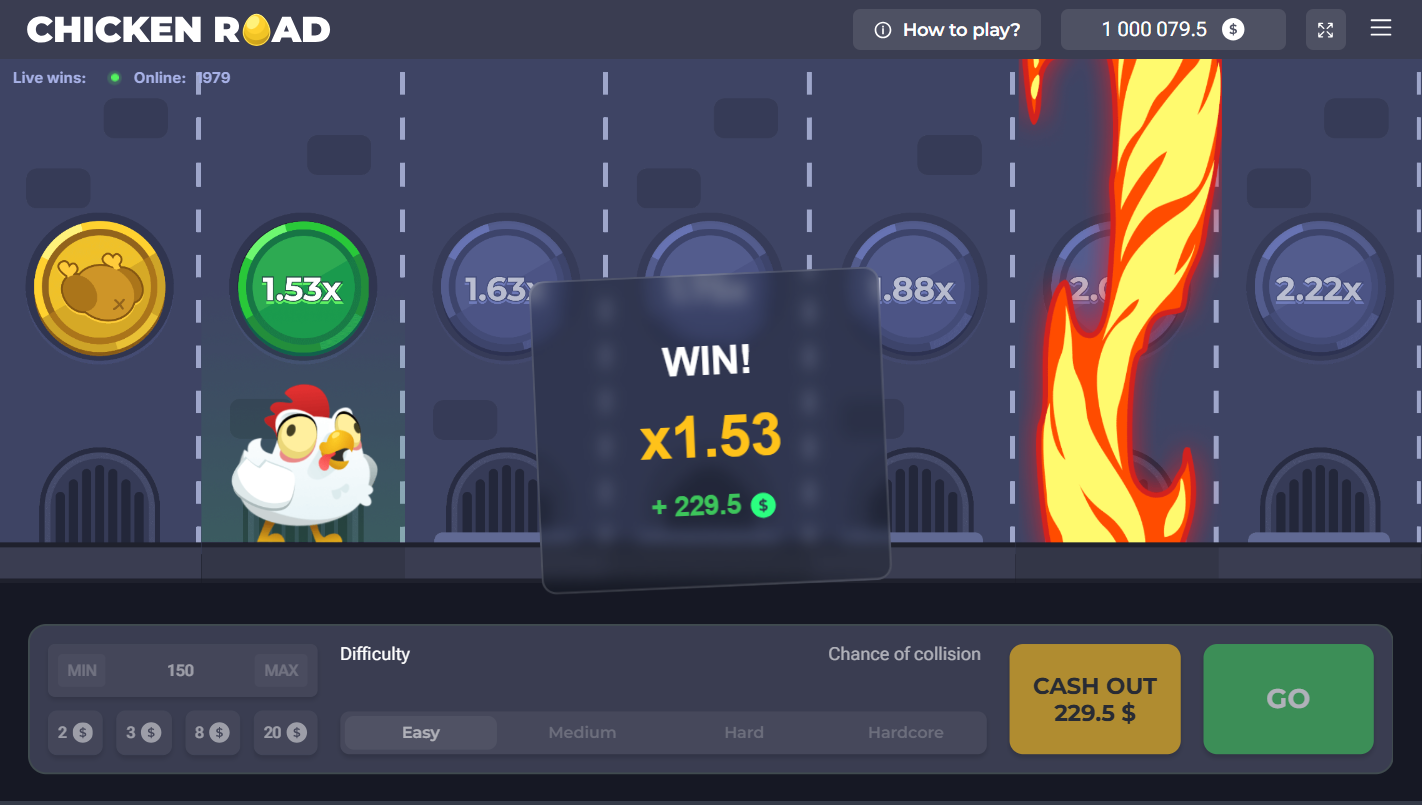
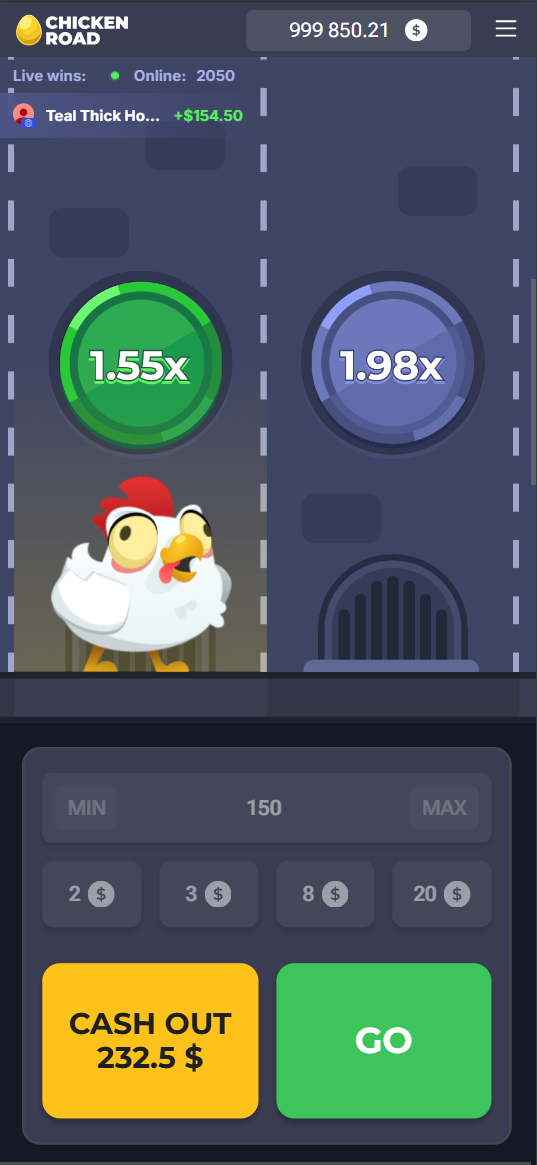
The single biggest behavioral risk in any manual step-based crash game is moving your cash-out target mid-round after a string of successful steps. The adrenaline of three or four safe steps in a row makes "just one more" feel far safer than it statistically is.
A simple pre-commitment framework
Before pressing start, decide a target range rather than a single number — for example, "cash out between 2x and 4x on Medium." A range gives you flexibility without opening the door to limitless escalation. Once you're inside that range and the next step looks tempting, the discipline is to stop, not negotiate with yourself.
Why ranges work better than fixed numbers
A fixed target like "exactly 3x" can tempt you to keep going the instant you reach 3x and the multiplier is still climbing. A range like "2x–4x" lets you cash out anywhere inside it without feeling like you're leaving value on the table, which makes the discipline easier to actually follow under pressure.
Step 4 — Track Your Average Exit Point
Most players don't lose because they misunderstand Chicken Road's rules — they lose because they drift away from their own plan mid-session. Keeping a simple log of your actual cash-out multiplier on each round, even mentally, helps you notice if you're consistently overshooting your stated targets.
| Pattern you might notice | What it usually means | Adjustment |
|---|---|---|
| Consistently cashing out below your target | You're playing too cautiously for the difficulty chosen | Consider a lower difficulty or wider target range |
| Consistently crashing right after your target | You're chasing "one more step" past your plan | Tighten your range, commit to the lower bound |
| Wildly inconsistent exit points | Decisions are emotional, not planned | Pre-commit a number before each round starts |
Common Mistakes to Avoid
Mistake 1 — Doubling stakes after a loss
Increasing your bet size after a crash to "win back" the previous round's loss does not improve your odds on the next round — each round is statistically independent. This pattern, often called a Martingale approach, accelerates bankroll depletion rather than protecting it.
Mistake 2 — Switching difficulty mid-session to chase losses
Moving from Easy to Hardcore after a losing streak, hoping a bigger multiplier ceiling will "make up" the difference, combines a worse decision (chasing losses) with a much higher per-step risk. If anything, a losing streak is a signal to lower difficulty or stop, not escalate.
Mistake 3 — Playing Hardcore as if it were a multi-step climb
Hardcore's per-step risk is high enough that treating it like Easy mode — taking several consecutive steps expecting to survive — is statistically unrealistic. Hardcore is best used for single-step or two-step attempts, not extended climbs.
Mistake 4 — Ignoring the published per-step odds
Chicken Road is unusually transparent about its odds compared to other crash games. Not checking the help panel for your chosen difficulty's exact per-step probability before playing means you're making decisions with less information than the game actually provides you.
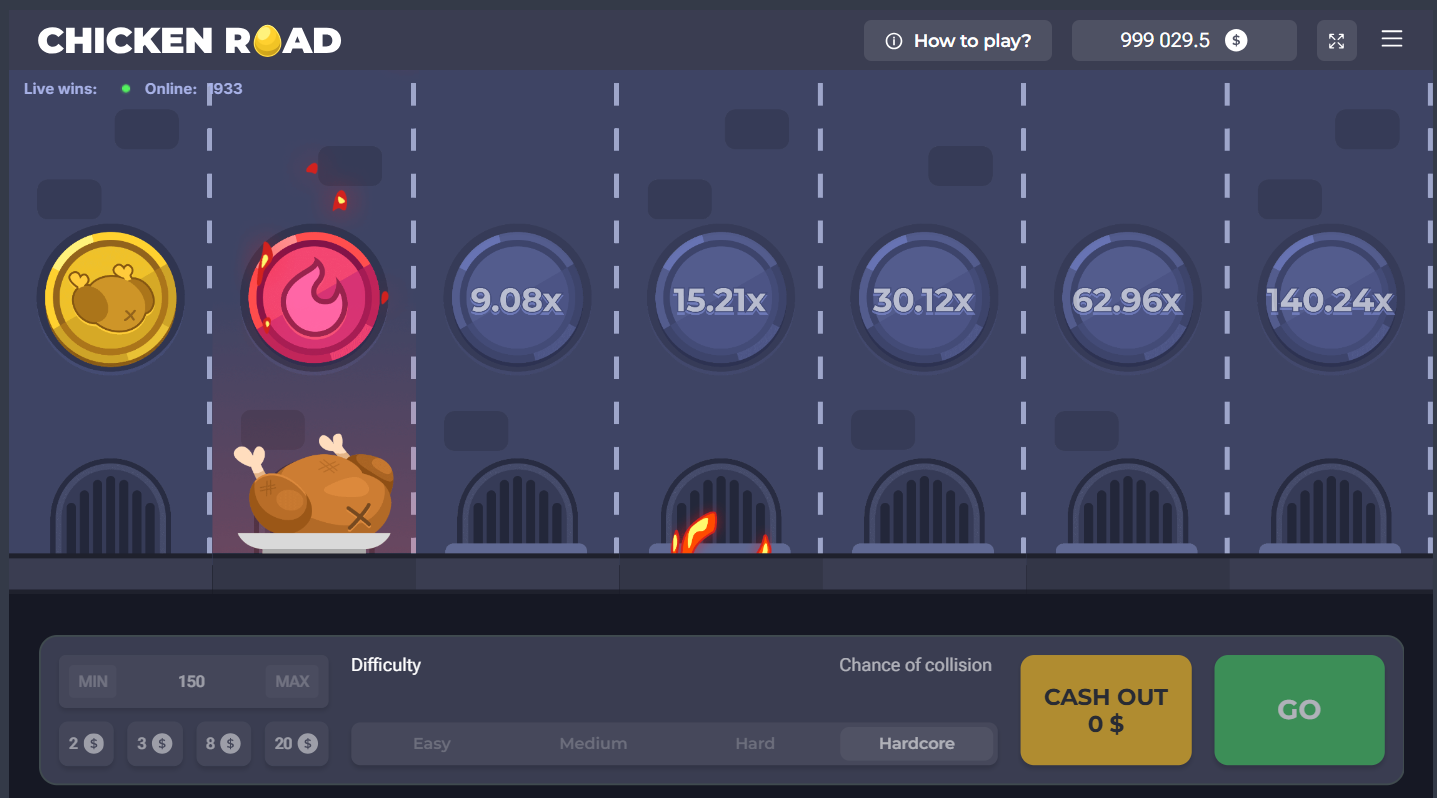
Try Chicken Road in a licensed casino
Pick a difficulty, watch the multiplier rise, and decide when to stop.
Using the Free Demo to Build Real Discipline
The free demo mirrors the real-money game's mechanics exactly — same difficulty options, same odds, same pacing. A focused way to use it: play 20 rounds on Easy with a fixed target range, then 20 on Medium, then 20 on Hard. By the time you've completed that sequence, you'll have a concrete, experience-based sense of which difficulty matches your actual risk tolerance, rather than a guess based on the paytable alone.
The multiplier keeps climbing — will you cash out?
Set a budget, learn the collision odds, then go for real play.
Frequently Asked Questions
Play Chicken Road today
Open a recommended casino and start a round in seconds.